MUST VISIT OFF BEAT TOURIST SPOTS
.
KHAJJIAR


This quiet and tranquil place with scenic beauty is located in Himachal Pradesh near Chamba and Dalhousie. It is about 6,500 feet (2,000 m) above sea level in the foothills of the Dhauladhar ranges of the Western Himalayas and snowy peaks can be seen in the distance. It is part of the Kalatop Khajjiar Sanctuary. An incredible place in itself where three ecosystem- the lakes, the pastures, the forests come together to make the experience more beautiful.
Mr Willy T Blazer, Vice Counselor and Head of Chancery of Switzerland christened this as “Mini Switzerland of India.” on 7 July 1992.

How to reach:
- Accessibility by road: It is one one and a half km drive from Dalhousie and Chamba. Himachal Road Transport Corporation operates bus service connecting Khajjiar with major cities in the state.
- Accessibility by train: Nearest railway station is Pathankot. It is 80 km drive from there to Khajjiar.
- Accessibility by Air: Nearest airport is in Pathankot which is 80 km away from here and Gaggal in Kangra which is 180 km far from here.
Best time to visit:
It is snow covered in winters, the temperature dips down to -1 degree Celsius The summers are pleasant. Best time to visit is from mid September to November.
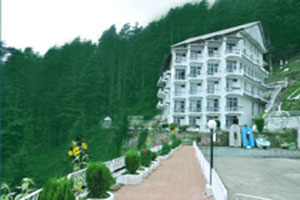
Where to Stay
- Hotel Royal Residency

- Hotel Hritik Palace

- Hotel Shining Star

- Hotel Mini Swiss
Where to go? What to do?
- Khajjiar Lake : It has a floating island which takes you by awe. Long walks by the lake side is a pleasure to the eyes and kids can enjoy rolling down and playing here.

- Paach Pandav Tree: The main root of tree is same but its base is devided into six parts. There is another deodar tree which has one root but base devided into 13. This is called “Mother tree”
- Khajji Nag Temple: Khajjiar Is Famous For The Popular Khajji Naga Temple At Khajjiar Main Ground. Shrine Is Dedicated To The Serpent God From Which The Name Is Believed To Have Been Derived. The Temple Dates Back To The 10th Century And Is Inter Spaced With Different Patterns And Images On The Ceiling And Wooden Posts. A Curious Blend Of Hindu And Mughal Styles Of Architecture Is Reflected In The Wooden Carvings On The Ceilings And Wooden Posts. The Image Carvings Are Said To Represent The Kauravas Who Were Tied Up Here In The Hideout By The Pandavas. The Temple Consists Of A Spacious Congregation Hall Sufficiently Enclosed By Wooden Supports. The Dome-shaped Shrine Is Made Of Slates Locally Extracted From Limestone Quarries. Adjoining Are Other Shrines Of Shiva And Hadimba Goddess Also. The Age-old Tradition Of Sacrificing A Goat Is Still Practiced Outside The Temple Premises.

DRASS

Drass, also known as ‘Gateway to Ladakh’ and is the second coldest inhabited region in the world. The temperature here drops down to 60 degree celsius. It is located 60 km west from ladakh, starts from the foot of Zoji la Pass. It has an elevation of 10,674 km from the sea level.
How to reach:
- Accessibility by road
Srinagar is connected to Kargil/ Drass sector via National HIghway 1. There are local buses plying between Srinagar and Kargil that passes through Drass sector.
- Accessibility by rail
Nearest railway station is Jammu Tawi railway station. From there you can hire a cab.
- Accessibility by Air:
There is an airport in Leh, from there you can take local bus or cab to reach Drass.
Best time to visit:
Summer season that is from May to September is the best time to visit Drass.
Where to stay:
There are tourist complex which have well furnished guest house and suites. There are some private hotels too which provide basic room and necessities.
Tourist Attractions:
- Dras War Memorial:
Constructed to commemorate the martyrs of Kargil War.

- Draupadi Kund:
It is believed that Draupadi, the protagonist of Mahabharata took her final bath before dying in Himalayas.

- Mushko Valley:
Fantastically beautiful stretch of lush green land with wild flowers.

SANDAKPHU

If you love treking then Sandakhpu should be on top of your list. It is located at North West of Darjeeling at height of 12,000 ft.Sandakhpu means ‘height of poison plant’ It can be a tiring trek but once you reach there you are welcomed by an enchanted scenic view. From Sandakhpu you get a 180 degree view of Eastern Himalayas, with ranges that belong to Nepal on the west, Sikkim and Bhutan in the middle and Arunachal Pradesh in the east.
How to reach?
- Accessibility by Road:
Sandhakpu is 58 km away from Darjeling. The road is constricting you can either go by Jeep or Land Rover or go treking from Manhebhajan.
Trek at glance: Manebhanjung – Tonglu
Tonglu – Joubari – Garibas
Gairibas – Kalpokhri
Kalpokhri – Vivekbhanjan – Sandakphu
Sandakphu – Kalpokhri – Rimbik
Rimbik – Jhepi
Jhepi – Kaijala – Darjelling.
The treks is amidst many forests, you get to see as many as 500 species of plants and the natural beauty is commendable.
- Aceessibiltiy by Rail:
The nearest railway station is Jalpaiguri
- Aceessibility by Air:
The nearest airport is Bagdogra.
Where to live?
There are GTA Trekkers huts which provide you with basic accomodation. You can make booking online through www.gtatourism.com
There are other private hotels too like Hotel Sharpa Chalet, which gives a view of Kanchenjunga peaks. Then there is Hotel Sunrise, Namo Budha Hotel.
Best time to visit
Best time to travel is April to May and September to October.
Tourist Attraction:
It is the only place where you get panaromic view of the world’s five highest peaks, the spectacular 8000 m magnificence- Everest, Kanchenjunga, Makalu and Lhotse in a continuous snow-clad curve. Besides these the adjoining peaks are also clearly visible- Napse, Koktang, Janu, Kumbhakarna, Kabru South, Kabru North, Pandim, Narsing, Naulekh, Chamlang and Dom Makheri. In the months of April and May an abundance of flowers make Sandakphu even more beautiful.
In far West from here you can see the mighty Mount Everest (29,029 ft., the highest peak in the world) and the Everest family. You will find it along with other peaks like Lhotse (27940 ft., the fourth highest peak) and Mt. Makalu (27,825 ft, the fifth highest peak). If you look further west, you will see the Chamlang (24,006 ft) that stands like a square wall of snow.

Turn towards east at Sikkim, you will see the striking and prominent peaks of Kanchenjunga family (summit 28,156 ft., the third highest peak in the world). Other peaks close to Kanchenjunga include Kabru (24,026 ft), Kumbhakarna (25,294 ft.) and Pandim (22,010 ft). Between Everest and Kanchenjunga you will see the peaks of Three Sisters.
If you look further east of Kanchenjunga, you will see the great Tibetan peaks of Narsing, Dongkya and Chola. And then you can spot Chamolhari in Bhutan.

No comments:
Post a Comment